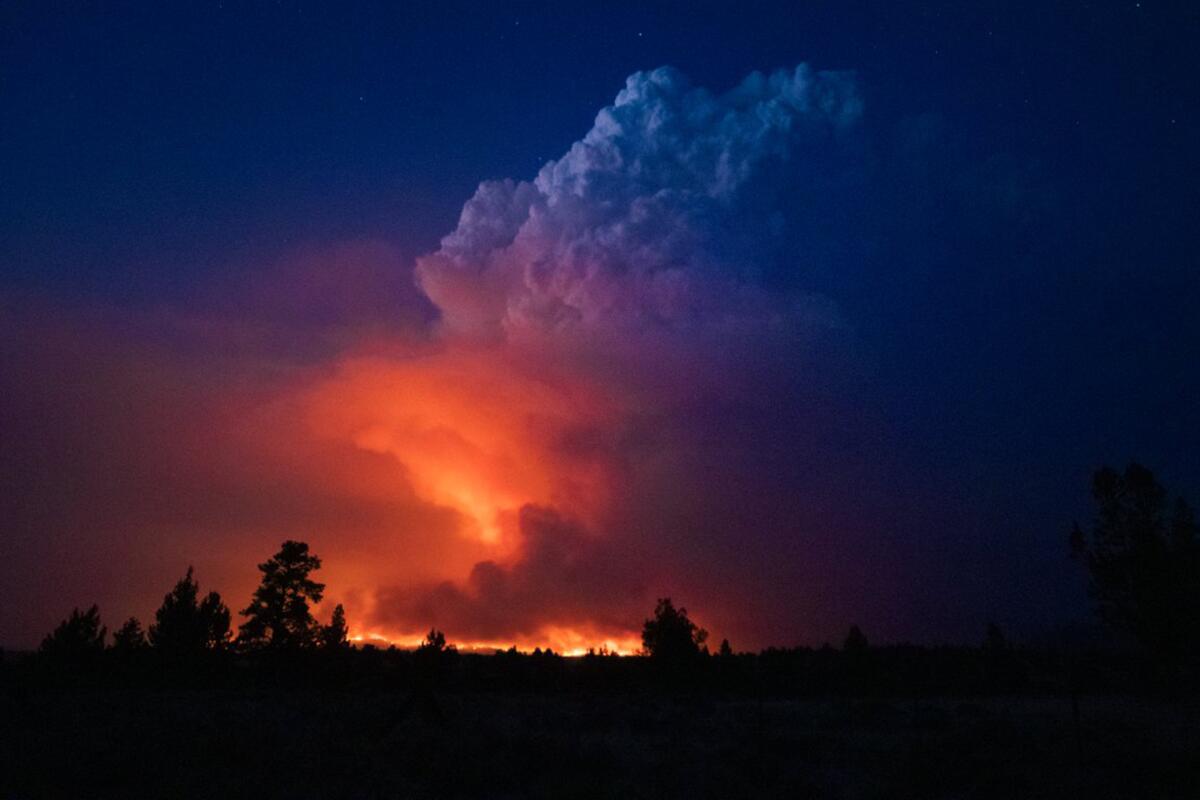
Bootleg Fire: A Part of Our History Here in Southern Oregon
In the summer of 2021, our forests, skies, and communities faced one of the most intense natural events in our region’s recent memory — the Bootleg Fire. This wasn’t just another wildfire. For many of us in and around Bly — near the Sycan Marsh, Brownsworth Creek, and the forested tablelands between Klamath and Lake counties — it became a chapter in the story of our land, our neighbors, and the changing landscape we call home.
How It Started — And How Big It Became
On July 6, 2021, a lightning strike ignited dry forest fuels in the Fremont-Winema National Forest, near Beatty, Oregon. What began as a small spark quickly transformed into a fire that would burn over 413,000 acres, becoming the third-largest wildfire in Oregon history. At its most rapid growth, parts of the fire expanded at rates near 1,000 acres per hour under extreme heat and drought conditions.
As the Bootleg Fire stretched across the landscape, its footprint became larger than many of the parks and forest blocks we know — an expanse that blanketed hills, watersheds, meadows, and timber stands that generations of Oregonians have walked, hunted, logged, and loved.
Our Communities on Alert
Although Bly itself sat outside the most intense fire perimeter, the Bootleg Fire’s reach shaped life for many in southern Oregon. Evacuations were ordered across large parts of Klamath and Lake counties, and thousands of residents watched the skies turn smoky and red from flames many miles away.
Smoke from the fire was so vast that it didn’t just affect immediate neighbors — it spread far beyond our valleys and forests, coloring skies across the West and even contributing to dramatic sunsets seen across the country.
Local firefighters, structural crews, and volunteers found themselves stretched thin as state and federal resources converged on the blaze. The Oregon National Guard worked alongside local responders, helping with evacuations, securing roads, and supporting incident command operations.
When the Forest Changed
The Bootleg Fire reshaped entire ecosystems. What had been dense forest, shade-covered streams, and rich understory vegetation became blackened earth and standing dead snags. In areas like Brownsworth Creek east of Bly, the landscape was deeply scarred — a change visible for years afterward as recovery began.
Creeks clogged with charred debris and hillsides lost their protective canopies. Heavy rains in the seasons that followed created logjams and complex watershed recovery challenges — a reminder that the impact of a fire isn’t only about the flame itself, but how the land responds afterward.
Survival, Memory, and Recovery
For many landowners and families, the Bootleg Fire became part of their personal history. Homes were saved by last-minute protection efforts; others were lost. Livestock, wildlife, and habitats were displaced. Long-time residents and new arrivals alike saw familiar places changed forever.
In the years since, recovery has been ongoing. Forest managers, community groups, NGOs, and state agencies have worked to replant millions of seedlings, restore wildlife corridors, and repair watersheds. Heavy logging debris has been managed, and new seedlings — lodgepole pine, ponderosa, and white fir — are rising where scorched trees once stood.
What It All Means for Bly and Beyond
The Bootleg Fire arrived at a time when drought and wildfire risks were already heating up across the West. But for communities like ours near Bly, it became a lesson in shared experience:
- The land is alive: Lightning, drought, and weather patterns can redefine a season in days.
- People matter as much as place: Neighbors, firefighters, volunteers, and families worked together, watched over each other, and shared information in an unfolding crisis.
- Rebuilding takes time: What burned must regenerate, sometimes differently than before, offering new habitat and new perspectives on forest resilience.
The Bootleg Fire isn’t just a record of acreage burned — it’s part of our collective memory here in southern Oregon. It’s a reminder that history isn’t something distant, but something written into the very soil, streams, and skies we walk under every day.